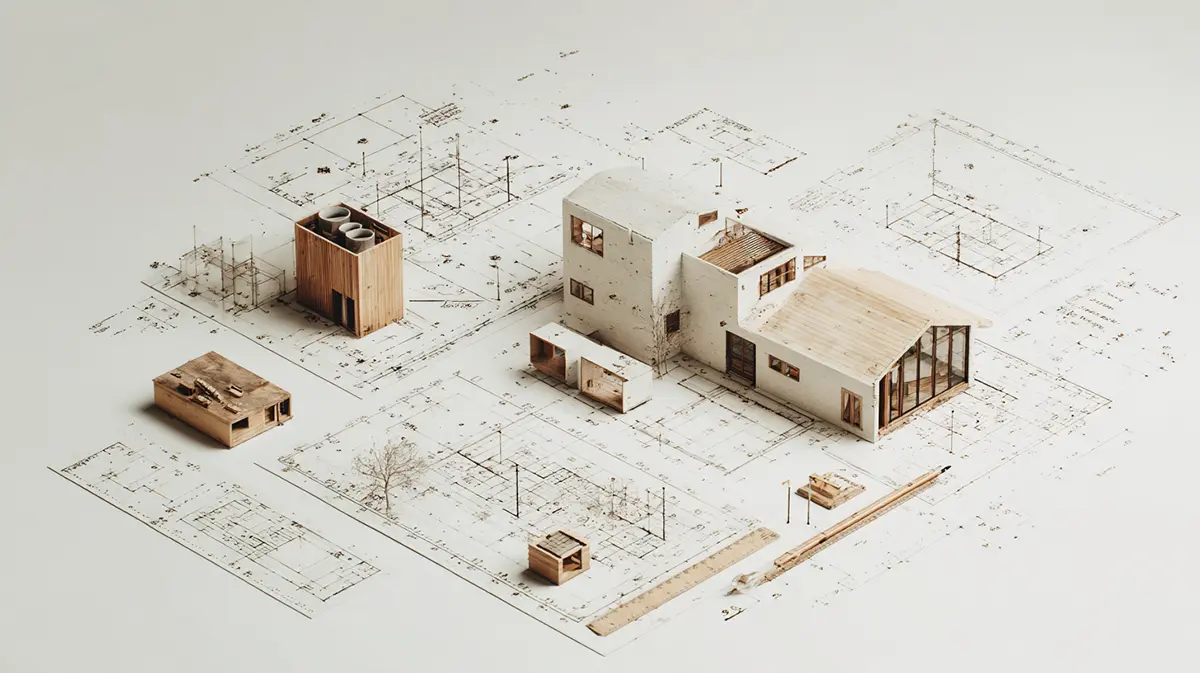
In design school, we spend years dreaming big. We design museums, airports, and sprawling urban master plans. We are trained to think in terms of skylines and city blocks.
Then, you graduate. And reality hits. Suddenly, you aren't designing a cultural center for a metropolis; you are designing a bathroom renovation for a couple in the suburbs, or a pop-up coffee stand, or a logo for your cousin’s bakery.
It’s easy to feel discouraged. It’s easy to think, "When do I get to do the real work?" But here is the secret that seasoned pros know: The small projects are the real work. In fact, they are often harder, more intense, and more rewarding than the giants. Here is the reality of working small.
1. There Is No Place to Hide
On a massive commercial project, mistakes can get lost in the sheer volume of the building. A misaligned shadow gap or a slightly awkward corner might go unnoticed by the thousands of people passing through. In a small project—like a tiny apartment or a boutique shop—everything is visible.
The Lesson: Small projects teach you rigor. They force you to obsess over the joinery, the material transitions, and the tactile experience. If the details aren't perfect, the whole design fails.
2. Constraints Are Your Fuel
Big budgets can sometimes make designers lazy. When you can afford anything, you don't always have to think creatively to solve a problem. Small projects almost always come with tight budgets and tighter spaces.

The Lesson: This is where actual innovation happens. Some of the most iconic designs in history (think of the Eames House) were born from strict constraints.
3. You Wear Every Hat
If you are working on a skyscraper, you are likely one of 50 people on the team. You might spend six months just detailing the staircases. On a small project, you are the Director.
The Lesson: It is a crash course in the business of design. You learn faster on a small project because you are responsible for everything. You see the direct link between a line you drew on paper and the contractor building it on site.
4. The Human Connection is Deeper
Big projects are often designed for "the public" or "the corporation"—nameless, faceless entities. Small projects are personal. You are designing for a family, a small business owner, a dreamer.
The Reality: You get to see the immediate impact of your work on someone's daily life. You see how that new kitchen changes the way a family eats dinner together.

The Verdict: Small is Mighty
Don’t look at small projects as "stepping stones" to something better. Look at them as laboratories. They are low-risk, high-speed opportunities to experiment, refine your voice, and build a portfolio of work that is distinctly yours.
The skyscrapers can wait. Right now, go make that bathroom renovation the most beautiful, functional space it can possibly be.