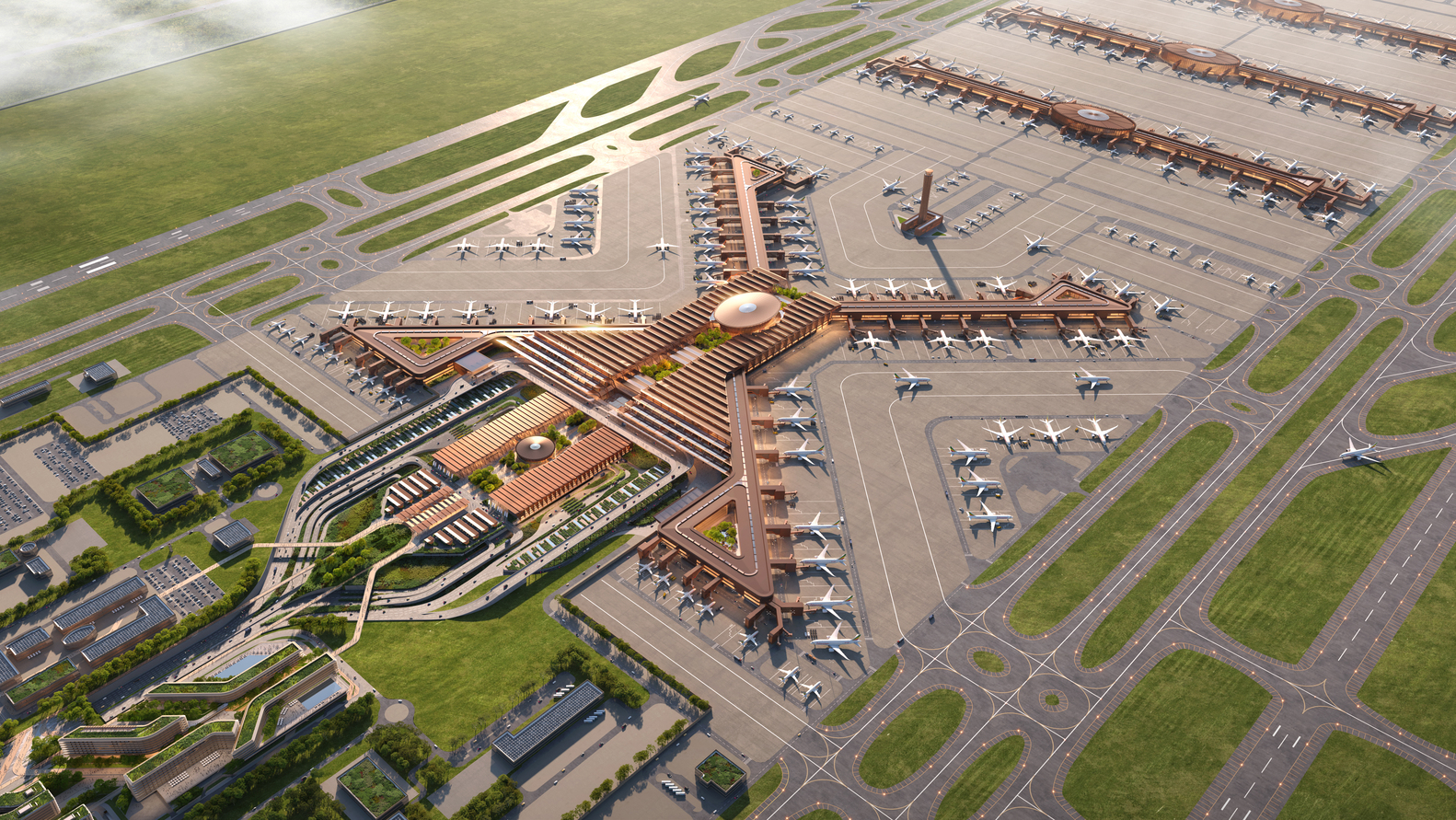
A transformative era for African aviation has officially begun. Construction is now underway on the Bishoftu International Airport (BIA), a monumental project designed by Zaha Hadid Architects (ZHA) for the Ethiopian Airlines Group. The groundbreaking ceremony, held on Saturday, January 10, 2026, was led by Prime Minister Abiy Ahmed Ali, marking the start of a development poised to become the largest airport on the continent.
Located approximately 40 kilometers south of Addis Ababa, BIA is designed to serve as a pivotal component of a broader regional transport network. The initial phase alone is projected to handle 60 million passengers annually. Future expansions will elevate this capacity to 110 million—more than four times that of the current Bole International Airport—supported by four runways and parking for up to 270 aircraft.
The site selection is strategic, driven by both operational efficiency and urban planning. Situated nearly 400 meters lower than the capital’s existing airport, the new location mitigates the performance challenges of high-altitude flight. This allows for longer runways and improved take-off weights, unlocking new potential for long-haul non-stop routes and increased cargo capacity. Furthermore, the airport will operate 24 hours a day without curfew restrictions, connected to central Addis Ababa via a dedicated high-speed rail link.
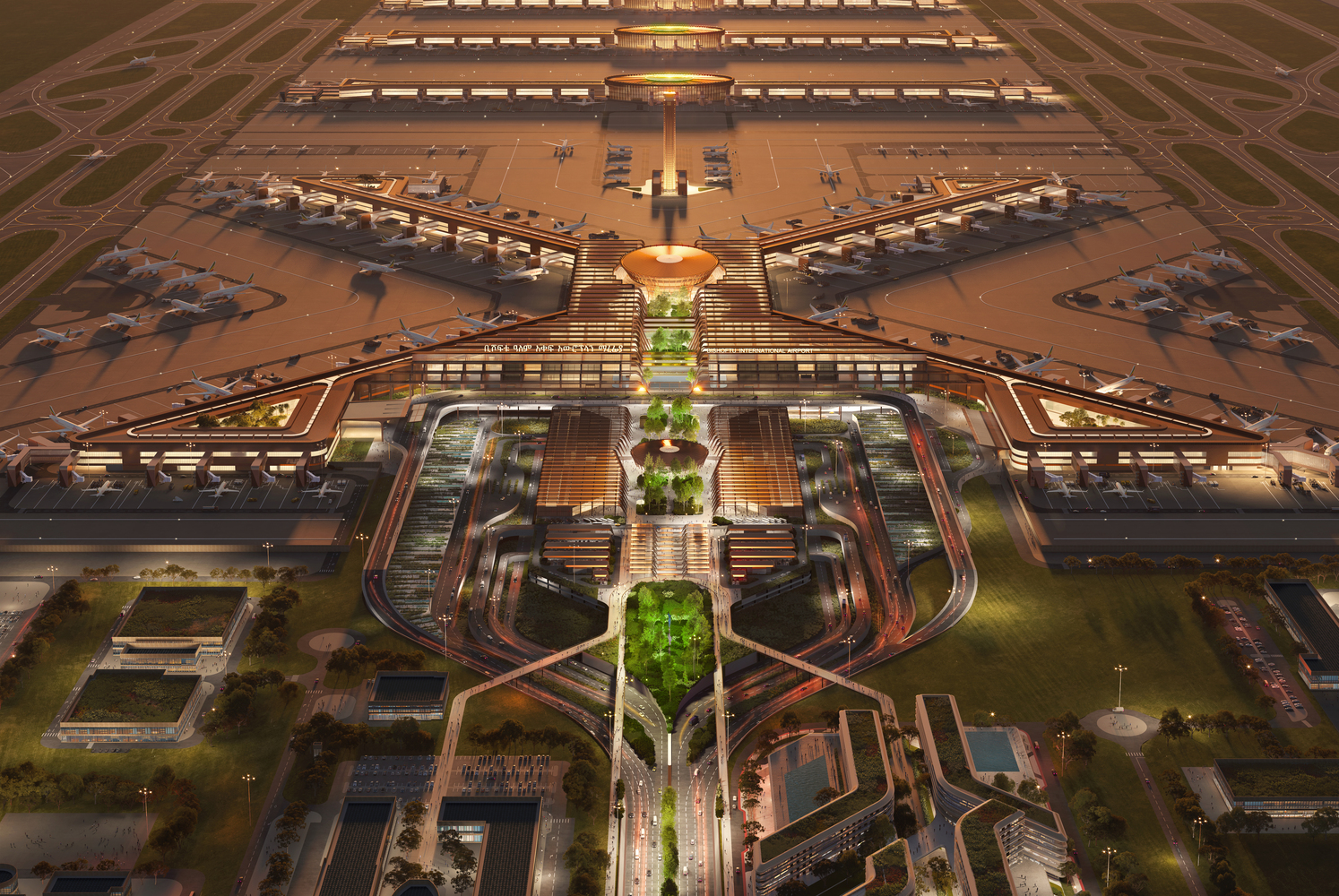
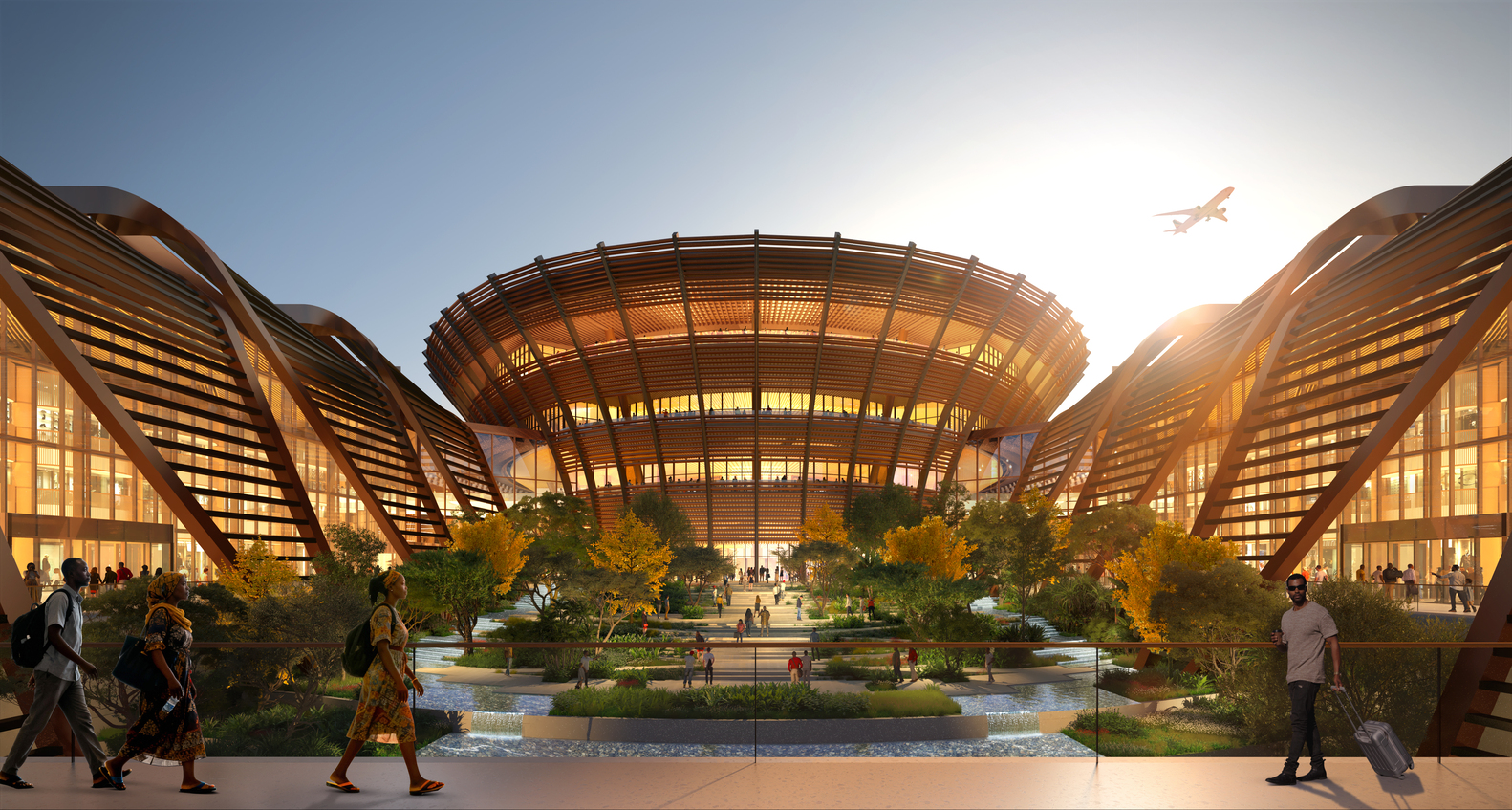
Zaha Hadid Architects has tailored the design to meet the specific demands of Ethiopian Airlines, currently Africa’s largest carrier. Recognizing the airport’s role as a major transfer hub, the terminal layout is engineered to streamline connectivity, with nearly 80 percent of passengers expected to be in transit.
Beyond logistics, the project envisions an integrated "Airport City" serving a local population of 80,000. The terminal itself is designed as a destination, featuring a 350-room airside hotel, extensive dining and entertainment options, and biophilic elements such as outdoor gardens and courtyards, ensuring a passenger experience that merges operational precision with architectural fluidity.